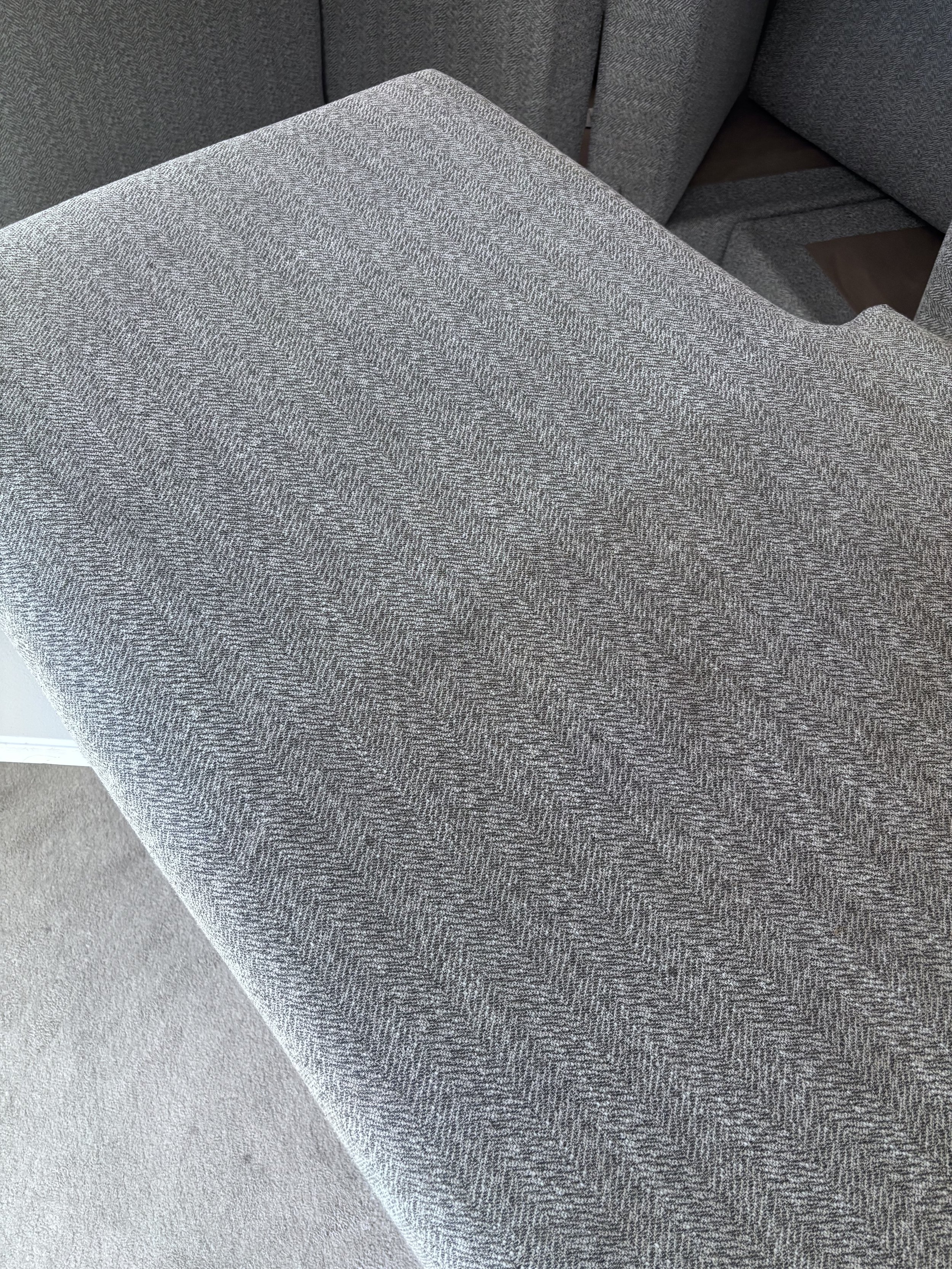
Professional Commercial Upholstery Cleaning…
Commercial upholstery cleaning requires a different approach than residential furniture cleaning. Upholstery in offices, restaurants, medical facilities, waiting rooms, churches, hospitality spaces, and other commercial environments can experience significantly higher levels of daily use. Body oils, food and beverage spills, dust, tracked-in contaminants, and repeated contact can quickly affect the appearance and condition of commercial seating.
Commercial furniture also comes in a wide variety of materials and constructions. Depending on the facility, we may encounter durable synthetic fabrics such as polyester, nylon, olefin, and microfiber, as well as blended fabrics and other specialty upholstery materials. Because different fibers, dyes, backing materials, cushions, and furniture constructions respond differently to moisture and cleaning chemistry, selecting the proper cleaning method is an important part of the process.
Our commercial upholstery cleaning process begins with an inspection of the fabric, construction, overall condition, staining, wear patterns, and level of soiling. Whenever necessary, cleaning solutions and procedures are tested in an inconspicuous area before proceeding.
Depending on the upholstery and facility, we may use hot water extraction (HWE), very low moisture (VLM) cleaning, or other fabric-appropriate cleaning methods.
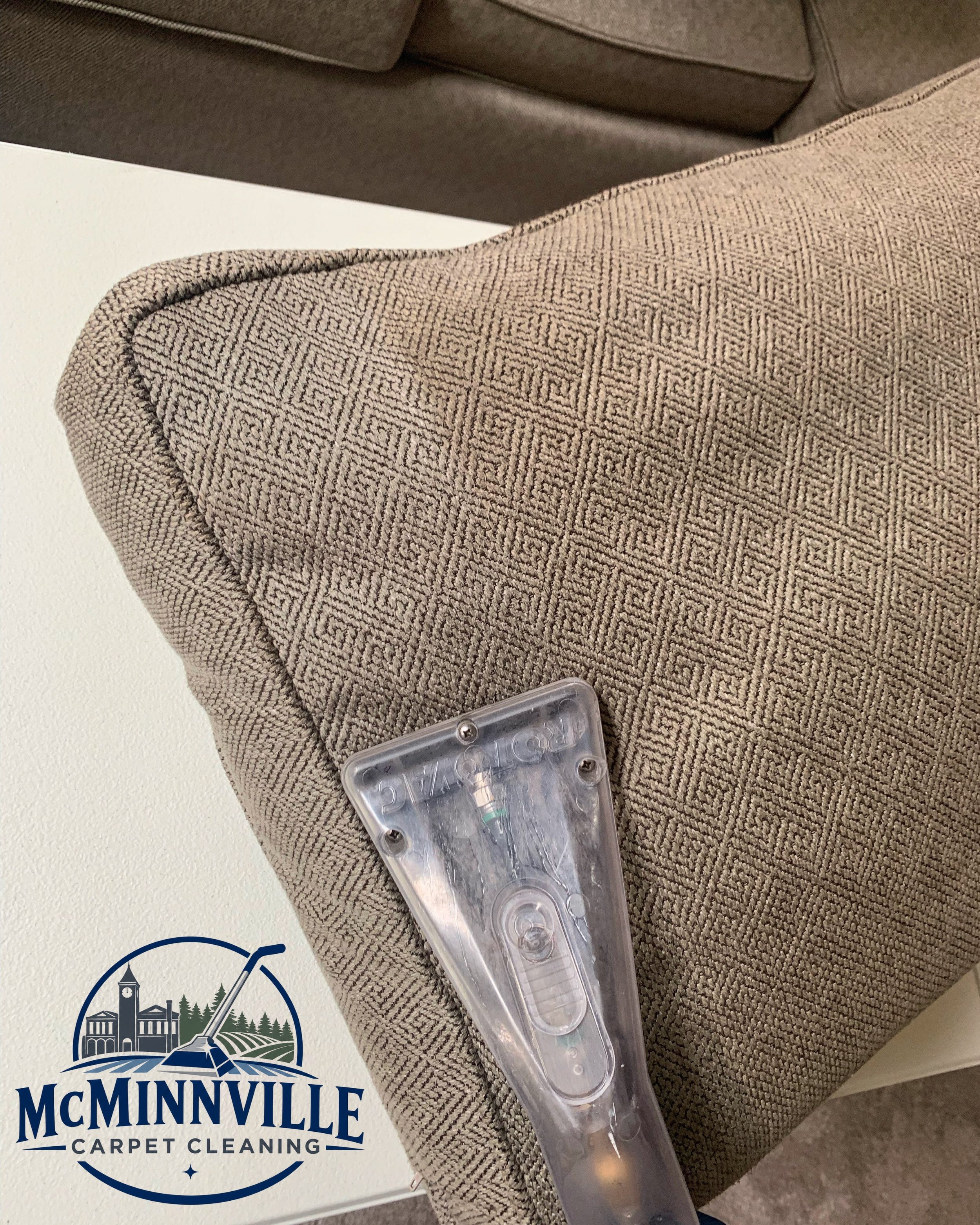
For upholstery suitable for wet cleaning, professional pre-treatment is applied to help break down body oils, food residues, spills, and accumulated soils. Specialized upholstery extraction tools are then used to carefully rinse and recover the cleaning solution along with suspended soils and residues. These tools provide controlled moisture and strong vacuum recovery, allowing us to thoroughly clean the fabric without unnecessarily saturating the upholstery or cushioning underneath.
For moisture-sensitive fabrics or commercial environments where rapid turnaround is especially important, VLM upholstery cleaning may be the preferred approach. Very low moisture methods use specialized cleaning solutions and controlled agitation to release soils while introducing significantly less moisture into the fabric. This can reduce drying times and allow furniture to return to service more quickly.
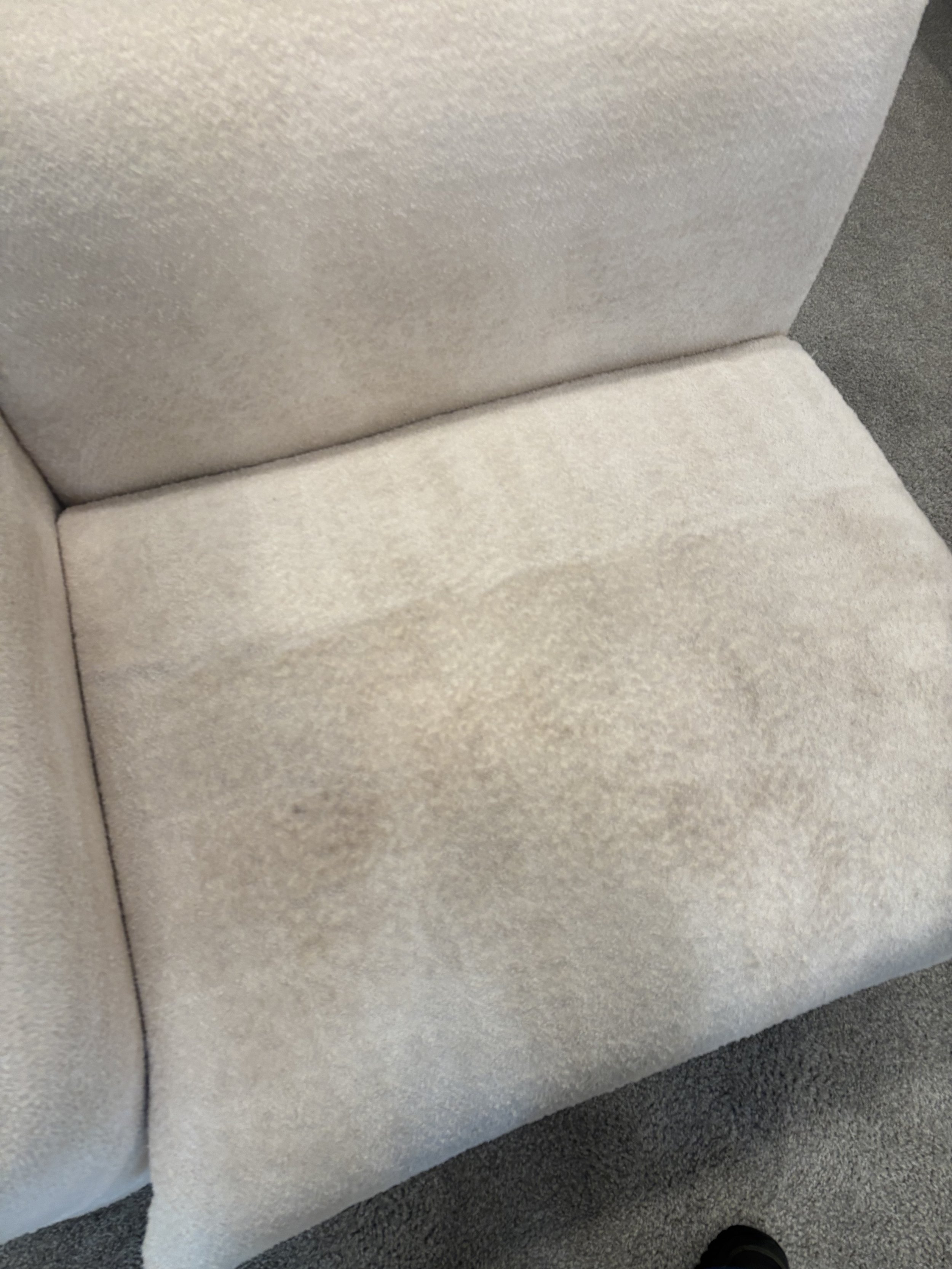
Our cleaning approach can also be adjusted based on how the furniture is used. High-contact areas such as armrests, headrests, seat cushions, and chair backs often require additional attention because these areas accumulate substantially more body oils and soils than the surrounding fabric.
Air movers may be used throughout the cleaning process to accelerate evaporation and reduce drying times. Actual drying time depends on the fabric, cushion construction, cleaning method, airflow, humidity, and level of soiling.
Routine commercial upholstery cleaning does more than improve appearance. Removing accumulated soils and residues helps maintain the fabric, control odors, reduce premature wear, and extend the usable life of commercial furniture. Maintaining clean seating also helps businesses provide a cleaner and more professional environment for employees, customers, patients, tenants, and guests.
For facilities with large quantities of upholstered furniture, cleaning can be incorporated into a scheduled maintenance program rather than waiting until visible soiling becomes severe. Services can also be planned around business hours to help minimize disruption to normal operations.
At McMinnville Carpet Cleaning, we tailor our commercial upholstery cleaning process to the furniture, fabric, facility, and operational needs of each business rather than relying on a one-method-fits-all approach.